Las Vegas Weddings · Elopement Planning
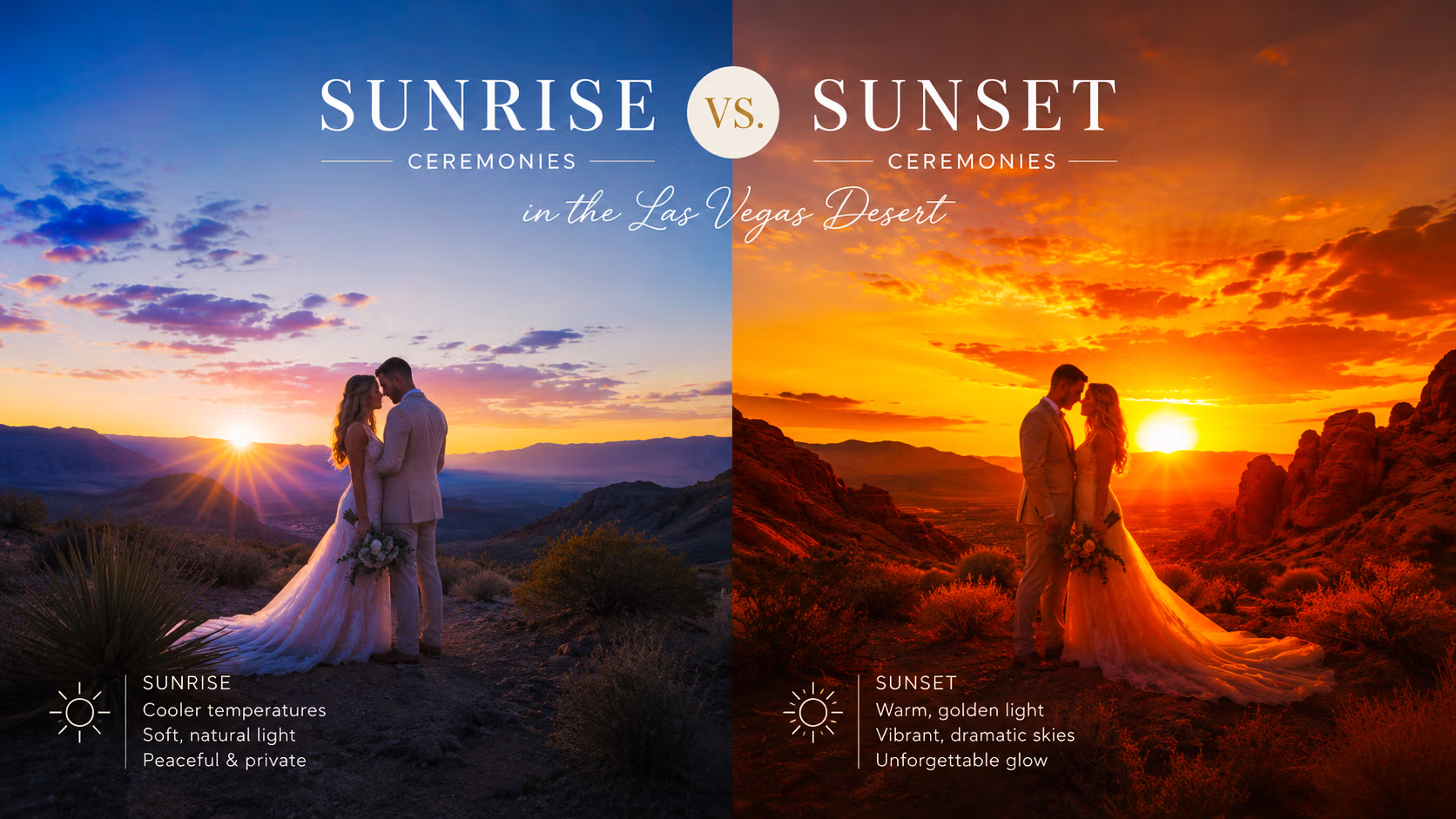
Sunrise vs. Sunset Ceremonies in the Las Vegas Desert
Same venue, same vows — two completely different mornings, temperatures, and photographs. Here's how to choose.
The Short Answer
Sunrise for Solitude & Summer. Sunset for Guests & Warm Light.
Our season guides cover which month to get married in. This one is about the hour — because at Valley of Fire, Nelson Ghost Town, and the Eldorado Dry Lakebed, the difference between a sunrise and a sunset ceremony is bigger than most couples expect. It changes the temperature you stand in, whether anyone else is around, the color of every photo, and what time your alarm goes off.
Both are beautiful. They're just beautiful in opposite ways. Here's the full comparison, plus a quick way to tell which one fits your wedding.
Side by Side
Sunrise vs. Sunset, Point by Point
The light
Sunrise
Cool, clean, and soft. The first hour after sunrise gives you blue-toned shadows and low side-light with almost no haze — crisp and calm.
Sunset
Warm and saturated. The last hour before sunset turns the sandstone amber and orange, then blue hour follows for another 20–30 minutes of soft color.
Temperature
Sunrise
The coolest part of the day. In summer a sunrise ceremony can start 20–30°F below the afternoon high. In winter it's the opposite — you may start in the 30s or 40s.
Sunset
Still holding the day's heat in summer, often 95–105°F at the Eldorado Lakebed or Valley of Fire. Comfortable and mild in spring, fall, and winter.
Crowds
Sunrise
Valley of Fire and the Strip photo spots are nearly empty. You'll often have a formation entirely to yourselves.
Sunset
Busier. Golden hour is the most popular window for other visitors and photographers, especially on weekends.
Your morning
Sunrise
Early. Hair and makeup may start at 4–5 a.m., and you'll leave the Strip about two hours before the ceremony to reach the desert in time.
Sunset
Relaxed. A leisurely morning, hair and makeup in the afternoon, and an unhurried drive out.
Guests
Sunrise
A big ask for a group — especially older guests or anyone with kids. Best for just the two of you or a very small party.
Sunset
Easy for guests, and it flows naturally into a celebration dinner back in town.
After the ceremony
Sunrise
The whole day is still ahead of you — a wide-open honeymoon schedule, breakfast on the Strip, a helicopter tour, a pool afternoon.
Sunset
The ceremony becomes the start of the evening — dinner reservations, a show, the Strip at night.
The Quick Version
Which One Is Your Wedding?
Choose sunrise if…
- You're eloping just the two of you, or with one or two witnesses
- Your wedding falls between May and September
- Privacy and having the landscape to yourselves matters more than anything
- You want the maximum amount of honeymoon day left after the ceremony
- You love cool, quiet, editorial-looking light
Choose sunset if…
- You're bringing guests, or anyone who would struggle with a 4 a.m. start
- Your wedding falls between October and April
- You want warm, golden, romantic tones in your photos
- You'd like the ceremony to lead straight into a dinner or night out
- A slow, unhurried wedding morning is part of the experience you want
By Venue
How Timing Works at Each Site
Valley of Fire
Day-use hours run roughly sunrise to sunset, so a sunrise ceremony means entering as the gates allow and a sunset ceremony means being packed up and driving out as light fades. Your LVWC planner handles the wedding permit and timing either way.
Eldorado Dry Lakebed
Open BLM land with no gate and no closing time, which makes it the most flexible venue for both sunrise and post-sunset blue-hour ceremonies. Summer strongly favors sunrise here.
Nelson Ghost Town
The canyon walls mean effective light ends earlier than the official sunset and starts a little later than the official sunrise. We time ceremonies to the light the site actually gets, not the clock.
Strip helicopter
The exception to all of this — the in-flight Strip ceremony is best after dark, when the lights are at full strength. Grand Canyon and Valley of Fire helicopter flights run during daylight hours.
One More Thing
We Set the Exact Time to the Light, Not the Clock
Once you pick sunrise or sunset, your LVWC planner backs into the precise ceremony start for your date and venue — accounting for how the canyon or the formations block early and late light, when the park opens, drive time from the Strip, and how long hair and makeup need. Tell us the feeling you want and we'll build the schedule around it.
Common Questions
Ceremony Timing FAQ
Is a sunrise or sunset wedding better in the Las Vegas desert?
How much cooler is a sunrise ceremony in summer?
What time would we need to leave the hotel for a sunrise desert wedding?
Will other people be at the venue during our ceremony?
Can we still do a sunset ceremony in summer?
Ready to Set a Time?
Explore Desert Wedding Venues & Packages
LVWC.com has been timing desert ceremonies to the light since 1998 — contact us for the exact sunrise or sunset window at your venue and date.